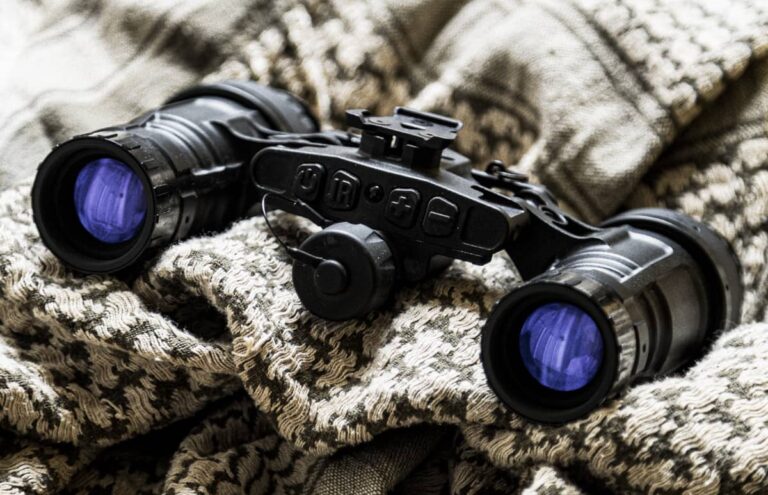
PVS-14 Night Vision Goggles and Monoculars Explained
If you’ve searched “pvs 14 night vision goggles,” you’re probably trying to sort out two things at once: what this platform actually is, and which version of it is worth your money. The PVS-14 name covers a huge range of configurations, price points, and tube qualities, and the word “goggles” in the search term is itself a clue that the terminology around this device gets muddled fast. This explainer breaks down what the PVS-14 platform is, how its specifications translate into real field performance, and what to check before you commit to a configuration.
What “PVS-14 night vision goggles” actually refers to
The PVS-14 is, by design, a monocular: a single-tube night vision device you look through with one eye. People search for it as “goggles” because it is frequently worn on a head mount or helmet mount in a way that resembles traditional binocular night vision goggles, and because some users pair two PVS-14 units side by side to get a dual-eye view. But a single PVS-14 is not the same thing as a dedicated binocular device with two tubes feeding into a shared optical path. Understanding this distinction matters because it affects depth perception, field of view, and how the device is mounted.
Note
If you want true dual-eye night vision, you are either buying two separate PVS-14 units and a dual mount, or looking at a dedicated binocular or dual-tube device. A single PVS-14 will only ever give you monocular vision, which is normal for this platform but worth knowing going in.
What modularity means for a PVS-14
The PVS-14 is built from separate parts, the tube, the housing, and the optics, rather than as a sealed unit. Nightfall lists complete units alongside housing kits and eyepieces for the platform, so a buyer can choose a tube and pair it with a housing and optics suited to the use case. Check that each combination fits before you buy.
Core specifications and what they mean in the field
The Nightfall Optics PVS-14 Night Vision Monocular gives a useful baseline for understanding what each spec actually controls. Magnification is 1× (unity), which is intentional: at unity magnification you retain natural depth perception and peripheral awareness, which matters more for walking, driving, or navigating terrain than it does for long-range spotting. The 26mm f/1.2 lens system and 40° field of view define how much of the scene you can see and how much light the system gathers, both of which affect usable image brightness in genuinely dark conditions. The diopter adjustment range of -6 to +2 lets users with significant near- or far-sightedness use the device without external corrective lenses, which is a practical detail that gets overlooked until someone actually needs it.
Focus range is another spec that sounds minor but has outsized practical impact. A focus range of 25 cm to infinity means you can read a map, check equipment, or examine something close to your face without removing the device, then refocus to distance without a separate accessory. Automatic/variable gain control and automatic brightness control (ABC) work together to protect the tube from bright light sources, such as a sudden headlight or flashlight, while still letting the device adapt to varying ambient light. The built-in IR illuminator supplements ambient light in fully dark conditions such as indoors or under heavy canopy, though it should be understood as a close-range aid rather than a way to extend detection distance in open terrain.
- Power is supplied by a single CR123 or AA battery, with runtime rated up to 75 hours, which affects how often you need to carry spares on extended operations.
- Weight is 275 g with battery installed, a figure that matters directly for head-mounted fatigue over a long night.
- The unit is rated waterproof and uses PVS-14 J-Arm compatible mounting, meaning it works with the broad ecosystem of existing PVS-14 mounts and accessories.
Tube generation and image quality
The single biggest driver of both cost and performance in any PVS-14 is the image intensifier tube itself, not the housing or lens. Tube generation (commonly Gen 2 or Gen 3) describes the underlying photocathode and microchannel plate technology, and within a generation, individual tubes are further graded by manufacturers on resolution and signal-to-noise characteristics. You’ll also see tubes described by figure of merit (FOM), a composite number combining resolution and signal-to-noise ratio that manufacturers use to rank tube quality within a generation. The Photonis Viper PVS-14 with Boomslang, listed below, carries 2000+FOM in its product name; ask for the tube’s data sheet to see the figures behind a designation like that.
Because tube quality varies even within the same stated generation, two PVS-14 units can look identical on paper and perform very differently in low ambient light. This is exactly the kind of thing a buyer should ask about directly rather than inferring from a spec sheet, since tube grading isn’t always presented the same way by every manufacturer. Nightfall can walk you through what a given tube’s FOM rating, generation, and manufacturer actually mean for your intended use, whether that’s hunting, property security, or professional field work.
Housing kits and modularity
Because the PVS-14 platform separates the tube from the housing, housing kits are sold independently and let you build or rebuild a unit around a tube you already own or are sourcing separately. The PVS-14 NL914C Housing Kit from Nightline is a representative example: it offers push-button power and gain controls, runs on CR123A or AA batteries with up to 75 hours of runtime, weighs 1.6 oz assembled, and is rated for an operating temperature range of -40°F to +140°F. It’s compatible with standard PVS-14 optics and mounts, meaning it isn’t tied to a single tube manufacturer, and it carries a 1-year warranty with a finish and dimensions (3.5″ × 2.5″ × 1.5″) typical of the platform.
Warning
Export control status varies by component and configuration, and you are responsible for confirming what applies to any specific unit before attempting to ship, carry, or transfer it internationally. Nightfall can discuss what’s involved, but you should verify the applicable rules for your situation directly.
Choosing a housing kit separately from a tube makes sense if you already own a tube from a prior unit, if you’re repairing or upgrading an existing PVS-14, or if you want a housing with a particular control layout or environmental rating. It generally doesn’t make sense for a first-time buyer with no existing tube, since sourcing and pairing a standalone tube requires some technical familiarity with how tubes are graded and tested.
Mounting, eyepieces, and building out a full setup
A PVS-14 is rarely used exactly as it ships. The PVS-14 Night Vision Monocular is listed as J-Arm compatible, one way to attach it to a helmet mount, and Nightfall also lists eyepieces and other parts for the platform. The Argus Light Weight PVS-14 Eyepiece, listed below, is an example of an eyepiece accessory; check its weight and fit against your tube and housing before you buy. The PVS-14 NL914C Housing Kit is listed as compatible with standard PVS-14 optics and mounts, but you should still confirm fit for whichever tube and housing combination you are assembling.
Tip
If you’re planning to wear the unit on a helmet for extended periods, weigh the eyepiece and any added lens or filter against total head-mounted weight, not just the base monocular weight, since comfort and neck fatigue are driven by the full assembled setup.
| Component | Runtime | Weight | Battery |
|---|---|---|---|
| PVS-14 Night Vision Monocular (Nightfall Optics) | Up to 75 hours | 275 g (with battery) | 1× CR123 or AA |
| PVS-14 NL914C Housing Kit (Nightline) | Up to 75 hours | 1.6 oz assembled | CR123A or AA |
Choosing between a complete unit and a build-your-own approach
For a buyer trying to decide between “best night vision goggles” options and a genuinely budget-conscious PVS-14 setup, the real decision point isn’t the housing or the accessories, it’s the tube. A complete unit removes the work of sourcing and pairing components yourself, and the Photonis Viper PVS-14 with Boomslang 2000+FOM listed below is sold as one. Building your own from a separate housing kit and tube can make sense for someone with prior PVS-14 experience or an existing tube to reuse, but it adds complexity that a first-time buyer usually doesn’t need to take on.
Whichever path you take, the specifications that matter most for day-to-day use, field of view, focus range, diopter adjustment, runtime, and mounting compatibility, are largely consistent across well-built PVS-14 configurations. What varies, often dramatically, is tube quality, and that’s the detail worth the most scrutiny before you buy.
Given the number of variables involved in a PVS-14 purchase, from tube generation and FOM rating to housing compatibility and export rules, it’s worth talking through your specific use case before deciding on a configuration. Nightfall Optics can answer questions about what any given specification means for your intended use and help you understand the tradeoffs between a complete unit and a modular build. Contact Nightfall to discuss which PVS-14 configuration actually fits what you’re trying to accomplish.
Frequently Asked Questions
Is the PVS-14 a true night vision goggle or a monocular?
The PVS-14 is technically a monocular, a single-tube device viewed with one eye, despite being commonly called “goggles” in search terms. It’s often head- or helmet-mounted in a way that resembles traditional goggles, and some users pair two units together, but a single PVS-14 does not provide true dual-eye vision like a dedicated binocular device.
Can I get dual-eye vision with a PVS-14 setup?
Yes, but only by purchasing two separate PVS-14 units along with a dual mount designed to hold both side by side. A single PVS-14 unit will always produce monocular vision only, which is standard for this platform and not a defect or limitation specific to one brand.
What does the PVS-14’s modular design mean for a buyer?
The PVS-14 platform is built from separate parts, the tube, the housing, and the optics, rather than as a sealed unit. That lets a buyer choose a tube and a housing separately and replace individual parts later, though each combination should be checked for fit and compatibility before purchase.
Why can two PVS-14 units be priced differently?
The PVS-14 name covers a range of configurations, so two units sold under it can differ in image intensifier tube generation and grade, in housing, and in included accessories, and those differences generally affect price. Ask for the tube data sheet and a list of what is included so you can compare like with like.
What should I check before buying a PVS-14 configuration?
You should verify the specific tube specifications, including generation, resolution, and signal-to-noise ratio, rather than relying on the PVS-14 name alone. It’s also important to confirm whether the housing and optics match your intended use case, since the modular design means components can vary widely between listings even under the same product name.