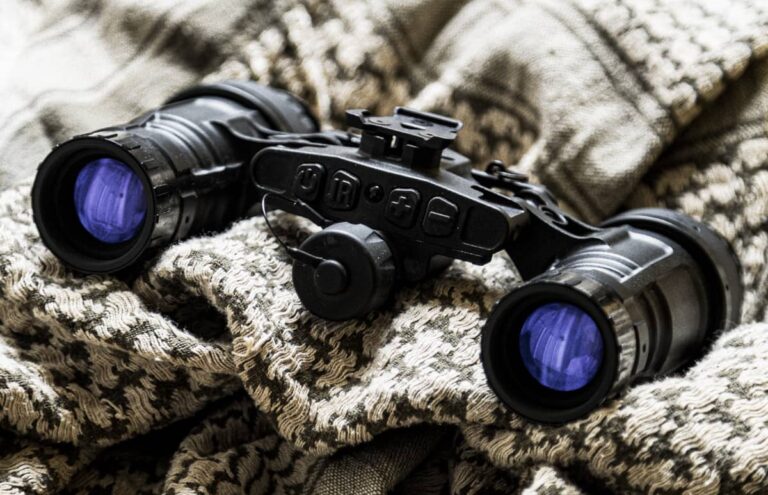
Quad Tube Night Vision
If you are looking at quad tube night vision, you are probably past the point of wondering whether night vision works and into the harder question of how much field of view is worth to you, and at what cost in weight, complexity, and budget. Quad tube systems exist to solve that specific limitation by adding two more tubes angled outward from the standard forward pair, which is a meaningful change in how the device is built and how it performs in the field. This article walks through what a quad tube configuration actually does, what tradeoffs come with it, and what to check before committing to one.
What makes a quad tube system different
A conventional night vision binocular has two image intensifier tubes, one per eye, both looking straight ahead. A quad tube goggle uses four tubes: two forward-facing tubes that function like a standard binocular, plus two additional tubes angled outward to extend peripheral coverage. The QTNVG, for example, uses this dual forward plus dual outward-angled layout to deliver a 120° panoramic field of view.
How the four tubes are arranged
The layout matters as much as the tube count. On the QTNVG from Detyl, for example, the viewing layout is specifically dual forward plus dual outward angled, which is the configuration that produces its 120° panoramic field of view. That arrangement is deliberate: the forward tubes preserve the straight-ahead resolution and depth cues you rely on for walking and judging distance, while the outward tubes extend awareness to the sides without requiring you to turn your head as far or as often. Not every panoramic night vision goggle on the market uses the same tube count or arrangement, so when you are comparing devices, it is worth asking the dealer specifically how the tubes are positioned rather than assuming “panoramic” always means four tubes in this configuration.
Field of view and why panoramic matters
A wider field of view means you detect movement at the edges of your vision sooner, which in practical terms translates to better situational awareness when moving through terrain, clearing structures, or simply walking in low light where threats or hazards can approach from the side.
The tradeoff is that a wider field of view, especially one built from angled tubes rather than a single wide lens, changes depth perception and can take some adjustment time for a new user. A buyer moving from a standard dual-tube binocular to a quad tube panoramic goggle should expect a learning curve, not because the device is flawed, but because the visual information you are receiving is genuinely different from anything you have used before.
Note
Field of view figures describe the optical geometry of the device, not a guarantee of detection distance or image clarity in any particular condition. Ask Nightfall to explain how a given field-of-view spec translates to real-world awareness for your specific use case.
Weight, balance and ergonomics
Adding two tubes does not just add optical hardware, it adds mass, and that mass sits on your head or helmet for extended periods. The QTNVG weighs 28 oz complete, which is meaningfully heavier than a comparable dual-tube binocular, and that difference is felt most acutely during long missions, extended hunts, or any activity involving a lot of head movement. Helmet-mounted night vision in particular concentrates that weight forward of the head’s natural center of gravity, which is why helmet counterweights and properly fitted shrouds become more important, not less, as tube count goes up.
Balance is not just a comfort issue, it is a functional one. A front-heavy goggle fatigues the neck faster, which degrades steadiness and can affect how long you can keep the device on target or in use before needing a break. Anyone considering a quad tube system for extended wear should plan the full mounting setup, helmet, shroud, and counterweight together, rather than treating the goggle as a standalone purchase.
Tip
If you are moving from a two-tube to a four-tube goggle, budget for a rear counterweight and re-check your helmet’s balance before your first extended use, not after.
Modularity: going from four tubes to two
Not every mission or outing calls for the full panoramic field of view, and some quad tube designs account for that by making the side tubes removable. The QTNVG’s side pods are removable for handheld use, which means the same device can function as a lighter, simpler dual-tube handheld or helmet-mounted unit when the extra field of view is not worth the added weight and power draw. Modularity like this means you are not locked into one configuration for every use case.
That said, modularity adds mechanical complexity: connectors, alignment points, and additional parts that need to seat correctly every time you reconfigure the device. A buyer who expects to switch configurations often should ask how the pods attach, how alignment is maintained between uses, and what the process looks like in the field versus at a bench. This is exactly the kind of practical question Nightfall can walk you through based on how you actually plan to use the device, rather than how it looks on a spec sheet.
Power and mounting considerations
Four tubes draw more power than two, and panoramic goggles typically rely on an external battery pack rather than small onboard batteries, both to supply sufficient power and to help offset the forward weight of the tube array. The QTNVG uses an external NVG battery pack, with power draw varying by setup, which means your runtime depends on the battery pack you pair with the device and how you have it configured. This is worth planning for in advance, particularly if you expect to use the goggle for extended overnight operations where battery swaps need to be quick and reliable.
Mounting is the other practical detail that is easy to overlook until it causes a problem. The QTNVG uses a dovetail mount interface, which is a common standard but not universal across every helmet mount or shroud on the market. Before you buy a panoramic or quad tube goggle, confirm that your existing helmet mount, or the one you plan to buy, matches the device’s mount interface exactly.
Warning
Mount interfaces are not universally interchangeable. Confirm the mount type on both the goggle and your helmet shroud before purchase, since a mismatch means the goggle cannot be mounted at all.
What to verify before you buy
Beyond field of view, weight, and mounting, there are a few additional things worth confirming directly with the manufacturer or with Nightfall before you commit to a quad tube system. Warranty terms matter at this price point: the QTNVG carries a 1-year limited manufacturer warranty, and warranty coverage can vary meaningfully between manufacturers in this category, so it is worth reading the terms rather than assuming parity. IPD, or interpupillary distance, adjustment is another detail to confirm, since a goggle that does not adjust to your eye spacing will never deliver the field of view or comfort the specifications promise; the QTNVG does offer adjustable IPD, but this should be verified for any device you are considering.
Night vision and thermal imaging equipment can also be subject to export controls, and those rules depend on the specific device, your location, and your intended use. Nightfall can discuss what is generally involved in that process, but you are responsible for confirming the rules that apply to your specific purchase and destination before you buy.
Where to go from here
Quad tube night vision solves a real problem, limited peripheral awareness in standard binoculars, but it does so with real tradeoffs in weight, power, and mechanical complexity that are worth understanding before you spend at this level. Whether a 120° panoramic field of view and a modular, removable-pod design like the QTNVG’s is the right fit depends on how you intend to use the device, for how long, and under what physical demands. Nightfall’s team can walk through the specifications on any panoramic or quad tube system in our catalog, explain what a given spec means for your particular use case, and help you think through mounting, power, and configuration before you commit to a purchase. If you are weighing a quad tube goggle against a standard binocular or a different panoramic configuration, contact Nightfall to talk through the options in detail.
Frequently Asked Questions
What is the main advantage of quad tube night vision over dual tube systems?
The main advantage is a much wider field of view. The QTNVG’s dual forward plus dual outward-angled tube layout gives a 120° panoramic view, so you see more at the edges without turning your head as often.
How are the four tubes arranged?
Two tubes face forward, like a standard binocular, and two are angled outward to extend peripheral coverage. On the QTNVG this dual forward plus dual outward-angled layout gives a 120° panoramic field of view.
Why do quad tube systems keep two tubes facing forward instead of angling all four outward?
The forward-facing tubes preserve the straight-ahead resolution and depth perception needed for tasks like walking and judging distance. The outward-angled tubes are added specifically to extend peripheral coverage without sacrificing the central clarity that the forward pair provides.
What should I weigh before choosing quad tube night vision over a dual tube system?
Quad tube systems add significant peripheral field of view, but this comes with tradeoffs in weight and mechanical complexity compared to dual-tube goggles. Buyers should consider whether the wider situational awareness justifies the heavier unit for their specific use case.
Talk to Nightfall before you buy
Equipment at this level is a considered purchase. Tell us how you plan to use it and the Nightfall team will help you compare options and answer your questions before you decide.