Night Vision vs Thermal
Every serious buyer researching night vision vs thermal eventually runs into the same question: should I be looking at image intensification or thermal imaging? The two technologies get lumped together because they both let you operate after dark, but they work on completely different principles, solve different problems, and in many cases aren’t interchangeable at all. Understanding the actual difference between thermal and night vision (not the marketing version, but how each technology forms an image and where it breaks down) will save you from buying the wrong tool for your use case, which at this price point is an expensive mistake to walk back.
This guide compares the two side by side, covers the scope question, explains what “infrared” really means, and ends with fusion systems that combine both.
Night Vision vs Thermal: How Each Technology Works
Traditional night vision, built around an image intensifier tube, works by amplifying existing ambient light. Starlight, moonlight, and residual skyglow enter the objective lens, strike a photocathode, get converted to electrons, multiply through a microchannel plate, and hit a phosphor screen that produces the familiar green or white glow image. This means image intensification needs some light to work with; it doesn’t generate an image from nothing, and in absolute darkness (a sealed basement, a moonless night under heavy cloud cover with no artificial light nearby) even a Gen 3 tube has little to amplify. That’s why serious night vision setups are almost always paired with an infrared illuminator, which emits light invisible to the naked eye but visible to the tube, effectively creating the light source the system needs.
Thermal imaging works on an entirely different principle: it doesn’t care about light at all. A thermal sensor, or microbolometer, detects differences in infrared radiation emitted by objects based on their temperature, not reflected light. Every object above absolute zero radiates heat, and a thermal core converts tiny temperature differentials across the scene into an electronic image, which is why a thermal scope will show you a warm engine block, a running animal, or a person’s body heat in conditions of absolute darkness, through smoke, and through light fog. The tradeoff is that thermal imaging shows you heat signatures, not visual detail. You can detect a shape and often identify a species or a human form by movement and posture, but you’re not reading a license plate or identifying fine detail the way you can with a good intensified image under reasonable light.
Thermal Imaging vs Night Vision: Image Quality and Detail Recognition
Night vision wins on fine detail, and thermal wins on detection. This is where the practical difference between thermal and night vision becomes most apparent to a buyer who’s used to thinking in terms of “resolution.” A quality Gen 3 image intensifier tube, under even modest ambient light, produces a sharp, high-contrast image with real detail: texture, facial features at reasonable distance, foliage patterns, brand markings on a vehicle. That level of fine detail matters enormously for identification tasks, whether that’s confirming a target species before a shot, verifying a person’s identity, or simply navigating terrain without stepping into a hole. Thermal, by contrast, renders the world in blobs of relative heat; a deer and a coyote of similar body mass can look similar at distance until you learn to read posture, gait, and ear shape, and identifying a human face thermally is essentially impossible beyond a few feet.
Thermal does have an identification advantage of its own, though it’s a different kind: detection. Because thermal imaging isn’t dependent on light or camouflage, it will reveal a warm body hiding in heavy brush, lying motionless in tall grass, or partially obscured by a thin layer of foliage that would defeat the eye and defeat intensified light just as easily. A hunter trying to find a downed animal in dense cover, or a property owner scanning a tree line for an intruder, is often better served by thermal’s ability to make heat sources pop regardless of concealment. The practical takeaway is that night vision wins on fine detail and identification, thermal wins on detection and concealment penetration, and many experienced users end up owning both because the tasks genuinely don’t overlap.
Thermal vs Night Vision at a Glance
Night vision amplifies light and wins on detail; thermal reads heat and wins on detection. The table below sets the two side by side before the detail.
| Night vision (image intensifier) | Thermal imaging | |
|---|---|---|
| What it senses | Amplified visible and near-infrared light | Heat (long-wave infrared) given off by objects |
| Needs ambient light | Yes, or an infrared illuminator | No |
| Strongest at | Fine detail, identification, navigation | Detection, finding warm bodies in cover |
| Smoke and light fog | Image degrades | Generally performs better |
| Faces and markings | Readable at reasonable range | Not readable beyond a few feet |
| Typical formats | Goggles, binoculars, monoculars, clip-on scopes | Monoculars, scopes, binoculars, weapon sights |
| Daytime use | Built for low light, not a daytime tool | Works in daylight too |
Range and Environmental Performance
Detection Distance
Thermal imaging generally offers a real advantage in raw detection range, particularly for warm-bodied targets against a cooler background. A quality thermal scope with a 12-micron or smaller pixel pitch sensor and a longer focal length lens can pick up a human-sized heat signature well past the distance an intensified tube can resolve the same figure as more than a vague shape, especially in open terrain with no ambient light. Night vision’s effective range is tied much more closely to light conditions and illuminator output; on a clear night with good starlight, a Gen 3 system performs beautifully at distance, but on an overcast, pitch-black night without supplemental IR illumination, usable range drops considerably.
Weather and Obscurants
Thermal’s other genuine edge is performance through atmospheric obscurants that defeat visible and near-infrared light entirely. Smoke, light fog, and airborne dust scatter and absorb light, which degrades or blinds an intensified system, but thermal radiation passes through those obscurants with far less interference, which is why thermal is the standard choice for fire-related work and for operators who need to see through battlefield smoke. Heavy rain and dense fog will degrade thermal performance too, since water droplets absorb infrared radiation, so neither technology is magic in truly severe weather. Thermal still degrades more gracefully in the conditions hunters and property owners actually encounter most often.
Night Vision vs Thermal vs Infrared: What the Terms Actually Mean
“Infrared” gets used for both technologies, which is where most of the confusion starts. An infrared illuminator, or IR flashlight, produces near-infrared light that is invisible to your eyes but bright to an image intensifier tube, so it belongs on the night vision side. Thermal imaging reads long-wave infrared, the heat that objects give off on their own, and needs no illuminator at all.
That is why a cheap “infrared night vision” camera with a ring of IR LEDs is neither of the two: it is a digital sensor lit by its own near-infrared beam, with a short range and none of a tube’s light amplification or a thermal sensor’s heat detection. When you compare night vision vs thermal vs infrared on a spec sheet, check whether the device amplifies light, reads heat, or simply lights the scene itself.
Use Case Breakdown
Different buyers arrive at this comparison with different problems to solve, and the honest answer is that the right technology depends entirely on what you’re actually doing in the field.
- A hunter doing predator calling or hog control at night, where the goal is detecting movement across open fields and then confirming target identification before taking a shot, often benefits from running both: thermal to detect and locate, then an intensified or digital day scope for the actual identification and shot if legal and appropriate in their jurisdiction.
- A whitetail or big game hunter scouting and tracking movement in heavy cover may lean thermal for its ability to pick up warm bodies, and for locating a downed animal during recovery. Always follow your state’s rules on the use of thermal and night vision devices while hunting.
- A tactical or security-focused buyer who needs to identify a person’s intent, read body language, and distinguish friend from foe at close to moderate range typically needs the fine detail that only an intensified tube provides, since thermal simply can’t deliver facial recognition or weapon identification reliably.
- An outdoor professional doing search and rescue work frequently wants thermal first, since the priority is finding a heat signature in difficult terrain rather than identifying fine detail, though a handheld intensified monocular remains useful for general movement once the search area narrows.
- A buyer building a do-it-all kit for property overwatch, scouting, and general nighttime navigation often ends up happiest with a thermal monocular for scanning paired with a traditional night vision binocular or goggle for sustained situational awareness, since neither tool alone covers every scenario well.
Night Vision vs Thermal Scope: Practical Considerations
When the decision narrows specifically to a weapon-mounted optic, the thermal vs night vision scope question comes with its own set of practical tradeoffs beyond image type. A dedicated thermal scope is typically a standalone digital unit with its own reticle, zero, and ballistic calculator, and it doesn’t require a separate day optic since it functions in daylight too, though image quality in bright daylight is usually inferior to a traditional glass scope and most thermal units aren’t optimized for all-day use. A traditional night vision scope, built around an intensifier tube, is usually mounted in front of or behind a conventional day optic as a clip-on or dedicated add-on system, which means it inherits the glass, reticle, and turret precision of whatever day scope it’s paired with, often giving a more familiar shooting experience for someone used to standard optics.
Buyers also need to think about how each handles target confirmation at distance. A night vision clip-on in front of a quality day scope lets you keep your established zero and simply add night capability, which many shooters find mechanically simpler and more precise for controlled, aimed fire at known distances. A dedicated thermal weapon sight, meanwhile, needs its own careful zero process and its performance characteristics shift with environmental temperature and barrel heat, which is worth understanding and testing before you rely on one. Neither format is objectively superior. It depends on whether your priority is maximum identification fidelity or maximum detection capability under field conditions, and that priority should drive the choice far more than brand reputation or spec-sheet numbers alone.
Fusion: Thermal and Night Vision Combined
Fusion systems exist because the two technologies fail in different places. A fusion device pairs an image intensifier with a thermal sensor and overlays the heat signature on the intensified picture, so you get the fine detail of night vision and the detection and cover-penetration of thermal in a single view. You do not have to choose, or carry two devices and swap between them.
The tradeoffs are cost and complexity: fusion units cost more than either technology alone, and they still depend on an intensifier tube for the detail half of the picture. They make the most sense for buyers who would otherwise end up owning both, or whose work (security, search, land management) needs detection and identification in the same hand-held or head-mounted unit. Browse our full fusion thermal night vision range, or the wider thermal devices category if you only need a thermal imager.
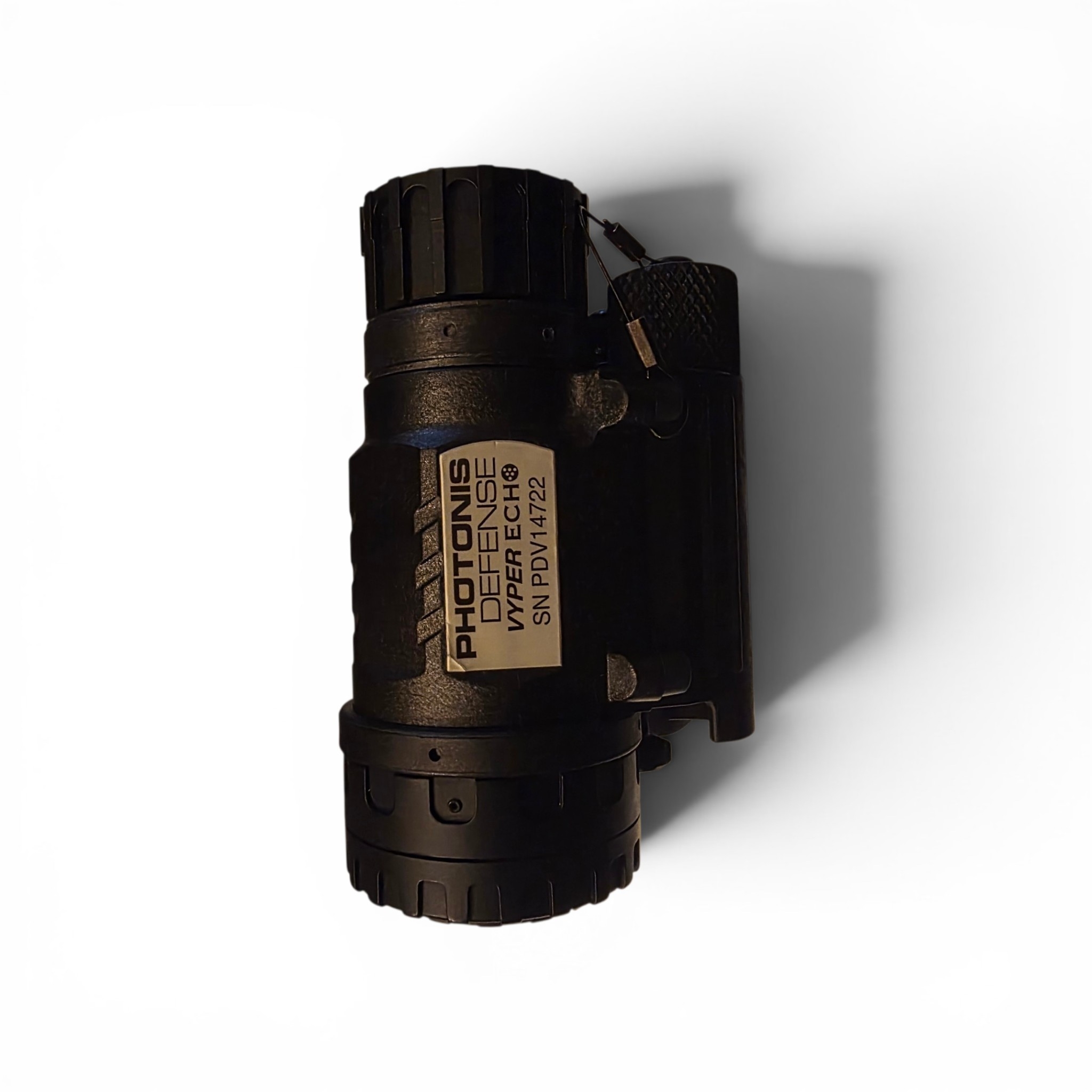
If your main need is the intensifier side, a single-tube monocular such as the Photonis Viper PVS-14 is the usual reference point for comparing against thermal: it is compact, can be hand-held or head-mounted, and shows the level of detail thermal cannot.
Thermal vs Night Vision: Quick Answers
Does night vision use thermal?
No. Night vision in the traditional sense amplifies visible and near-infrared light, while thermal reads heat. The two are only combined in fusion devices that deliberately carry both sensors.
Can you use thermal as night vision?
For many tasks, yes: a thermal imager lets you see in total darkness, so it works as a night-time viewing tool. It is better at detection than identification, though. You see heat shapes rather than faces, markings, or fine detail, and glass blocks thermal radiation, so you cannot look through a window with it.
Can thermal vision see through walls?
No. Thermal imagers read the surface temperature of what is in front of them. They can show a warm wall, or a heat source behind thin foliage or in smoke, but they do not see through solid walls.
Is thermal or night vision better for coyotes?
For finding coyotes, thermal usually has the edge, because a warm body stands out against cooler ground and cover at distance. Night vision is better for confirming what you are looking at once the animal is closer. Many predator hunters carry both or choose a fusion device.
Can you hunt at night with a thermal scope?
It depends on your state, the species, and the season. Some states restrict or prohibit night hunting of big game such as deer, while predator and feral hog rules are often looser, and some require permits. Check your state wildlife agency before using any thermal or night vision device while hunting.
What do Navy SEALs use for night vision?
Specific loadouts are not published and change with the mission. Publicly, special operations forces are associated with four-tube panoramic goggles such as the L3 GPNVG-18, and the U.S. military has been fielding fusion goggles that overlay thermal on an intensified view. You can see comparable multi-tube formats in our panoramic night vision goggles.
What is the best thermal night vision?
There is no single best. For detection range choose a quality thermal scope or monocular; for identification and detail choose an intensified goggle, binocular, or monocular; and if you want both in one device, a fusion system is the answer.
Making the Right Call for Your Situation
There’s no universal answer to thermal versus night vision because they’re not really competing for the same job; they’re complementary technologies that happen to both get marketed under the “night vision” umbrella. The right question isn’t which technology is better, it’s which problem you’re actually trying to solve: detection across distance and through cover, or identification and fine detail recognition in low ambient light. Many experienced users in hunting, security, and professional fields end up owning both, using thermal to find and night vision to confirm, because the tasks are genuinely different enough that one tool rarely does both jobs well.
This is exactly the kind of decision where talking to someone who has actually run both technologies in the field matters more than reading another spec sheet. At Nightfall Optics, our staff can walk through your specific use case (species, terrain, distance, budget, and whether you need a standalone unit or a weapon-mounted system) and help you land on a configuration that actually matches how you’ll use it, rather than one that just looks impressive on paper.
Frequently Asked Questions
Can thermal imaging see in complete darkness better than night vision?
Yes, because thermal imaging detects heat radiation rather than light, total darkness doesn’t affect its performance at all. Night vision, by contrast, needs some ambient light to amplify, so in a pitch-black environment like a sealed room or heavily overcast moonless night, a traditional image intensifier has little to work with unless paired with an infrared illuminator.
Does night vision work without any light source at all?
Not effectively. Image intensifier tubes amplify existing light from stars, the moon, or skyglow, so in near-total darkness there’s nothing for the tube to boost. This is why most serious night vision setups use an infrared illuminator to create an invisible light source the tube can detect.
Can thermal imaging see through fog, smoke, or foliage better than night vision?
Thermal imaging generally performs better in light fog, smoke, and foliage because it’s detecting heat signatures rather than reflected light, which scatters more in those conditions. Night vision relies on light amplification, so visibility drops significantly when ambient light is blocked or scattered by particulates.
Is thermal imaging or night vision better for identifying a person versus just detecting them?
Night vision typically wins for identification because it produces a detailed, recognizable image using amplified ambient light, showing facial features and clothing. Thermal imaging excels at detection (spotting a warm body against a cooler background), but the heat-signature image lacks the fine detail needed to identify who or what you’re looking at.
Do I need an infrared illuminator if I buy a night vision device?
In most real-world conditions, yes. Without supplemental infrared light, a night vision tube depends entirely on whatever ambient light is available, which can be insufficient on overcast or moonless nights, so pairing the device with an IR illuminator ensures consistent performance regardless of natural light levels.
More guides
Browse every Nightfall Optics buyer’s guide, comparison and explainer.